Oxygen delivery
Cardiac output, blood flow and local muscle extraction cooperate to deliver and use oxygen. Looking at one number alone can hide the larger picture.
Foundations
A readable guide to how the heart, lungs, muscles and nervous system respond to physical work across adulthood.
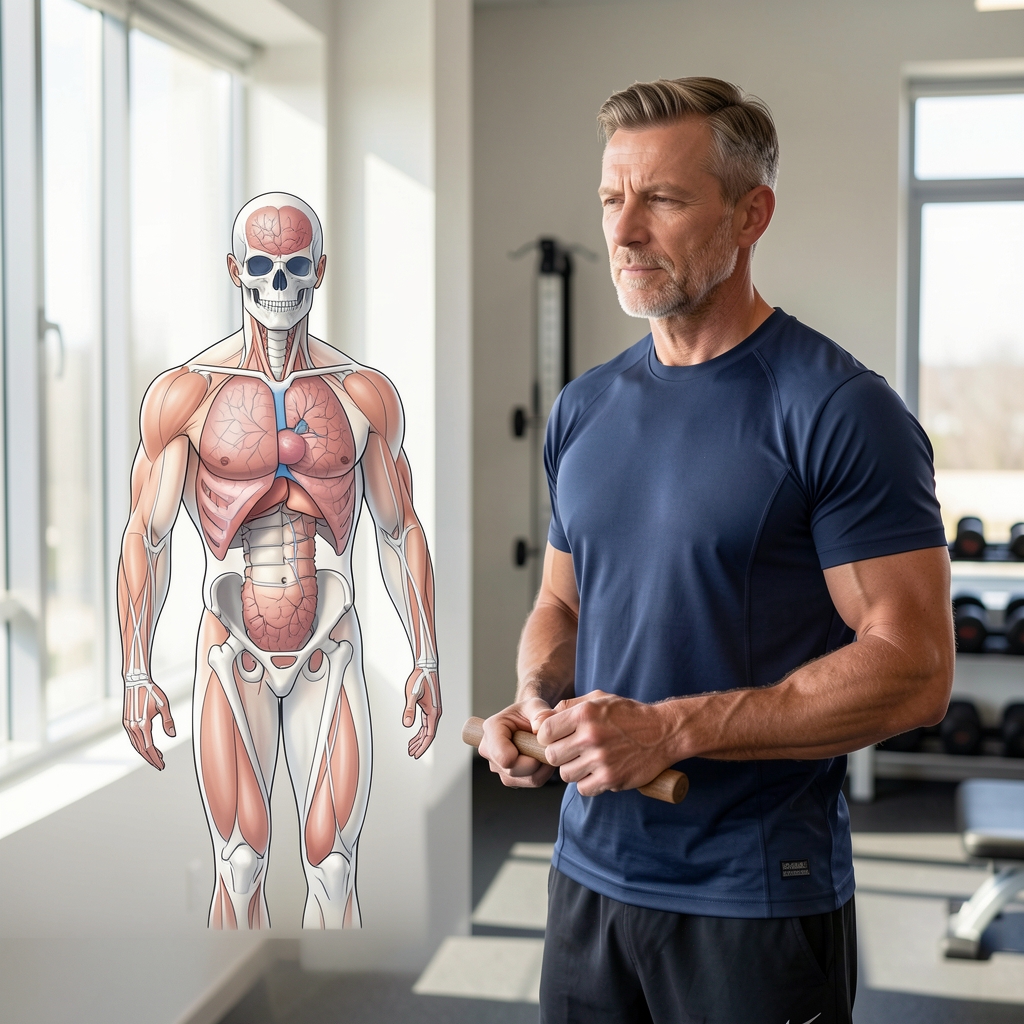
At low intensity, aerobic metabolism can meet much of the energy demand and conversation remains comfortable. As intensity grows, ventilation rises, muscle recruitment becomes more extensive and the body relies more heavily on pathways that can supply energy quickly. The transition is gradual rather than a single switch, which is why useful training zones are best treated as ranges with context.
Age does not erase adaptation. It does make recovery, previous training history, medication, sleep and joint tolerance more relevant to interpretation. Genese presents these variables as part of the physiology rather than as footnotes.
| System | Useful observation | Training implication |
|---|---|---|
| Cardiovascular | Heart-rate trend and recovery | Manage repeated aerobic exposure |
| Respiratory | Breathing rhythm and talk comfort | Choose sustainable intensity |
| Neuromuscular | Coordination and force control | Prioritise quality before fatigue |
Cardiac output, blood flow and local muscle extraction cooperate to deliver and use oxygen. Looking at one number alone can hide the larger picture.
Carbohydrate and fat contribution shifts with intensity, duration and prior meals. A balanced explanation avoids moral language around either fuel.
Breathing, muscular discomfort and mental effort are meaningful signals. They become more useful when recorded alongside the session context.

A heart-rate trace can rise because of heat, anxiety, dehydration or a harder workload. The same pace may feel different after travel or poor sleep. A physiology-first approach does not dismiss the watch; it places the watch inside the human situation.
“Measurement becomes useful when it improves a decision, not when it simply produces more decimals.”
Move from mechanism to application with our endurance and functional training pages.
Endurance guideTraining guide