
Article · 14 October 2026
Why an aerobic base changes the feel of training
Easy work develops the ability to keep the whole system organised while effort remains manageable.
The change is often subtle
An aerobic base does not announce itself with one dramatic session. It appears in small details: the warm-up settles sooner, a familiar route requires less negotiation, and the next morning feels more ordinary after a longer outing. These are not guarantees, but they are useful observations when repeated over time. A reader who logs the same easy route for several weeks will usually notice these small shifts before any change shows up on a watch or an app.
For men returning to training after years of inconsistent activity, the first task is often tolerance. Tendons, feet, sleep and schedule need to accept the pattern before intensity becomes the centre of the plan. Rushing this stage by adding pace or distance too quickly is one of the more common reasons a renewed training habit stalls within the first two months.
Use the easy session as information
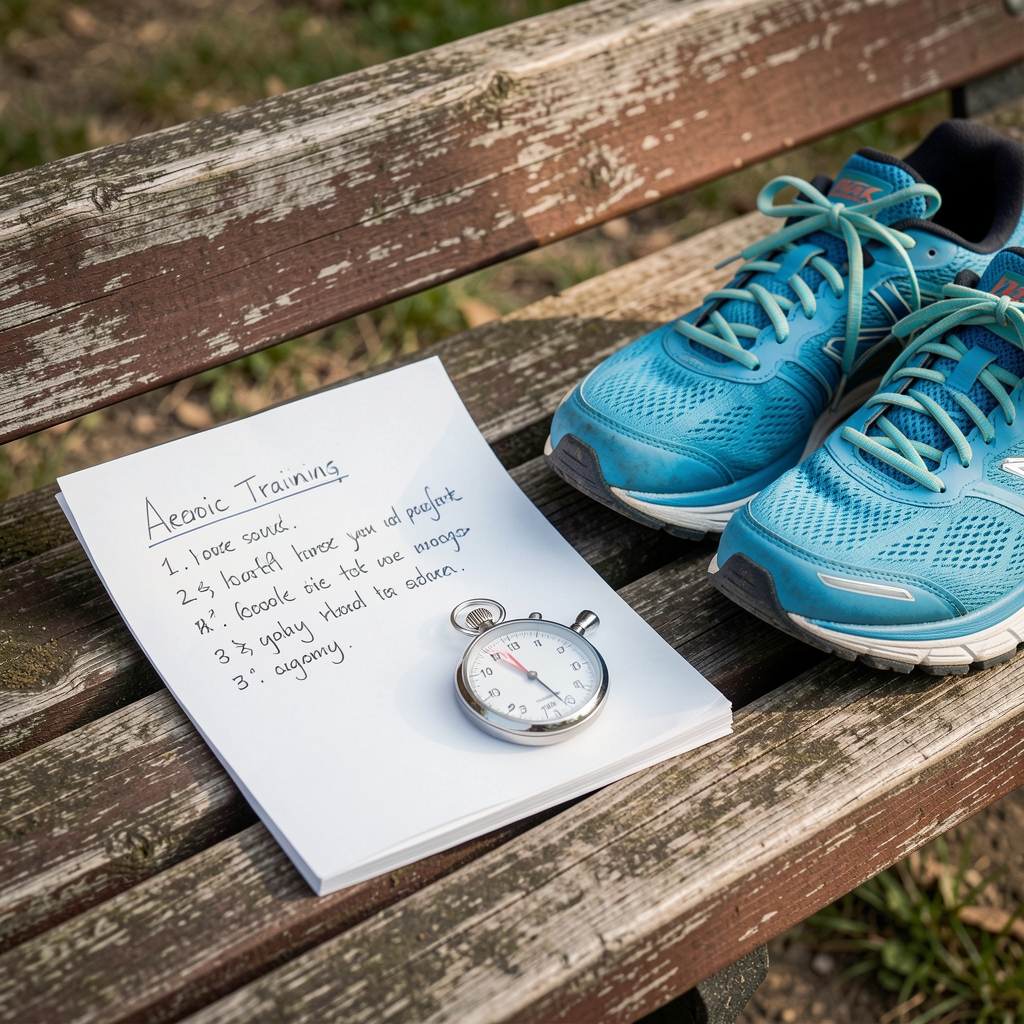
Choose a pace where breathing can remain controlled, then notice how that pace changes across weeks. Heat in Jakarta, hills, poor sleep and stress can raise the cost of a session without changing the route. A useful log records those conditions instead of treating every variation as a failure. A session that feels harder on a humid afternoon is not necessarily a sign of lost fitness; it may simply reflect the environment that day.
"The base is built in the sessions that leave enough room for the next one."
Three effort zones at a glance
| Zone | How it typically feels | Common use |
|---|---|---|
| Easy | Breathing stays controlled; a full sentence can be spoken comfortably | Most weekly sessions, used to build a durable base |
| Moderate | Breathing becomes noticeable; short phrases are manageable, full sentences are not | Occasional sessions to practise sustained, purposeful effort |
| Hard | Breathing is demanding; conversation is difficult to sustain | Brief efforts used sparingly once a base is established |
Signs a base may be developing
- A familiar route feels slightly less demanding at the same effort level.
- Heart rate during an easy session settles into a lower, steadier range over several weeks.
- Recovery between sessions feels more predictable, even after a slightly longer outing.
- The desire to speed up during an easy session becomes easier to resist.
Logging conditions, not just distance
- Record the planned pace or effort before beginning the session.
- Note temperature, humidity and time of day, since these affect Jakarta sessions noticeably.
- Record how the body felt afterwards, separate from the numbers on a device.
- Review the notes every few weeks to separate genuine trends from single difficult days.
A few short reflections
"Easy should feel almost too easy at first; that is usually a sign it is set correctly."
"A base is not built on the days you feel strong, but on the days you choose not to push."
"Heat changes the cost of a session long before it changes the result."
Common questions about aerobic base work
How long does it take to notice a change?
Many readers report noticing small shifts within four to eight weeks of consistent easy training, though individual timelines vary widely.
Should every session be easy?
Most weekly sessions benefit from staying easy, with harder efforts introduced sparingly once the base feels stable.
Does heat in Jakarta change the approach?
Humidity and temperature can raise the effort cost of a given pace, so adjusting expectations on hot days is a reasonable response rather than a setback.
Read more about endurance training